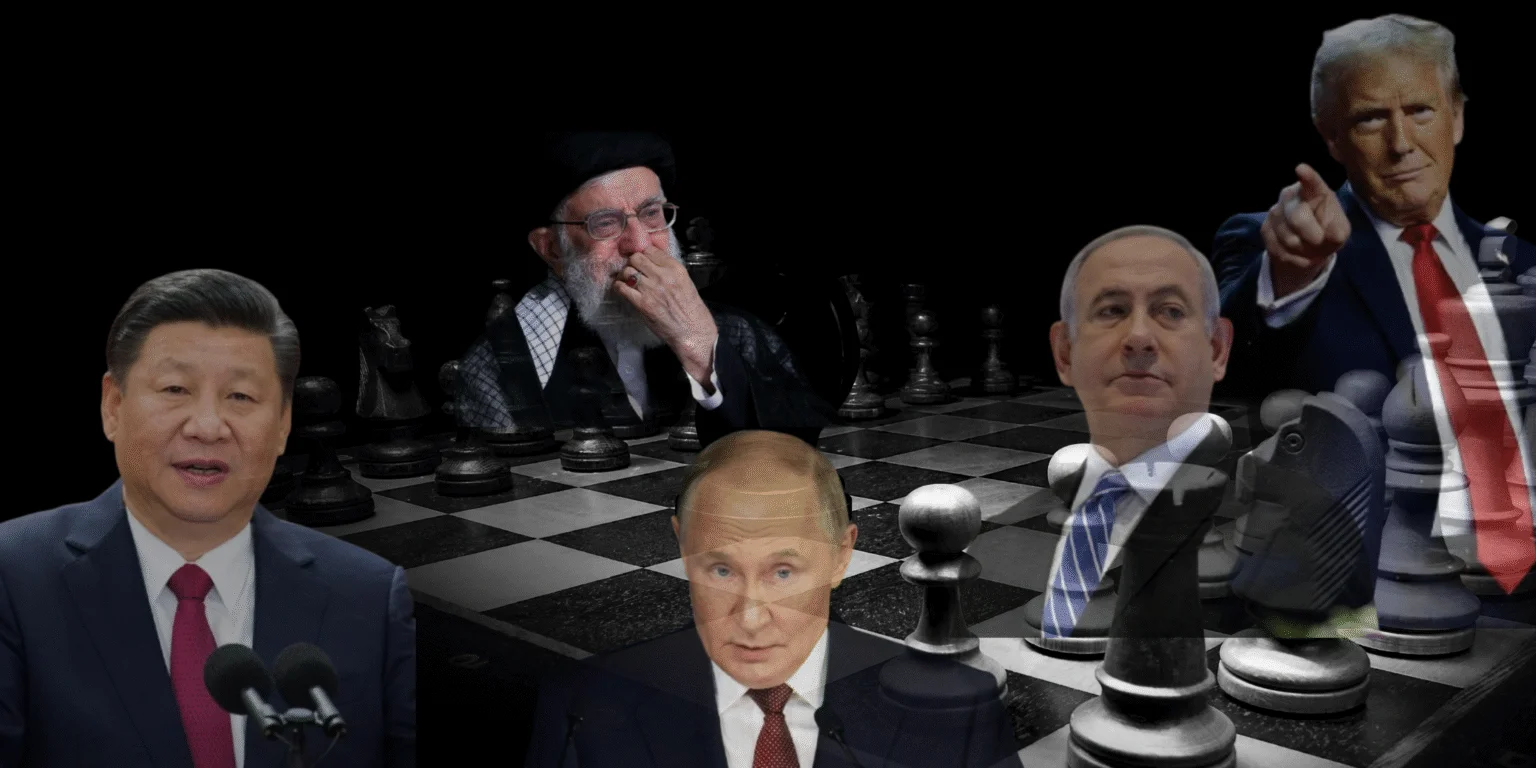
Israel-Iran conflict marked by Air Superiority, precision strikes, missile barrages, and proxy setbacks made lots of changes to not only to the middle east but also to the global geopolitics. War between Israel vs Iran is over. Now the question is who is the winner. When we bring this up, there are some poetic arguments as well. As if there are no winners in war, humanity has died, etc. Which is an outright lie that is not valid in the real world. There are winners and losers. There are successes and failures. In this war, I see some clear winners and some somewhat winners. There are also big losers and somewhat losers.
Winners
Israel can be consider as the conflict’s decisive victor. Its audacious strikes crippled Iran’s nuclear facilities at Parchin and Khojir, destroyed 33–50% of Iran’s missile launchers (200–400 units), and decimated 60% of its ballistic missile stockpile (1,500 + missiles). The targeted killings of IRGC commanders and nuclear scientists damaged Iran’s military core. War with Hezbollah and other proxies in previous years also shifted the tide. The majority of Hamas and Hezbollah leaders died. Hamas no longer poses a significant threat, as they once did. Israel not only reduced Iran’s regional influence, but also proved its intelligence and military capabilities. This will strengthen its deterrence and image.
United States: Washington, Israel’s consistent ally, reaps strategic dividends without direct involvement. Some critics like Carlson and Candace suggested this will be an all-out war. Even 3rd world war. Most of Isolationists estimated thousands of American deaths, Boots on the ground etc. However, none of these predictions came true. The US military campaign was quick, effective, and well-organized. There were zero casualties. Trump has a higher approval rating among both Republicans and Democrats in this matter. “Iran should not have nuclear weapons under any circumstances.” This is a rare topic on which almost 80% of Americans agree. The involvement strengthens America’s role as a regional security guarantor, especially among Gulf allies concerned about Tehran’s ambitions.
Both Israel’s and the United States’ air forces, as well as Lockheed Martin, stand to benefit greatly from this conflict. Israel achieved air superiority over Iran in 48 hours. Which is something Russia has yet to accomplish in Ukraine. Even after three and one-half years. This demonstrates that American fighter jets are unmatched in modern warfare.
The new Syrian government is also a huge winner who benefits immensely. Iran’s support for the Assad regime fueled years of oppression and conflict. With Tehran’s missile and proxy capabilities gutted, Iran can no longer meddle in Syria’s transition, giving Damascus a chance to rebuild without external interference. Assad allies will be isolated.
Qatar proved themselves as the mediator between enemies. Gulf state has cemented its role as a diplomatic center. By mediating between warring parties, Qatar gained some PR as well as increased its soft power. Its importance as strategic hub and wealth position it as a trusted broker in future talks.
Ukraine may be a long way from this Middle Eastern fiasco. But it is also a beneficiary, despite its geographical distance. Iran’s role as Russia’s drone supplier during the Ukraine conflict made it an important Kremlin ally. With Iran’s military infrastructure battered and resources shortened, the country’s ability to sustain drone exports has diminished. This will be a huge relief for Ukraine’s frontline.
Losers
Despite all those dramas. Propaganda, Ai images and celebrations the Islamic Republic is the biggest loser in this conflict. Its nuclear program is in disarray, its missile arsenal and launchers are severely depleted, and its air defenses are exposed. The deaths of IRGC leaders and scientists compound these losses, while Hezbollah’s degradation and Syria’s shift away from Tehran’s orbit erode Iran’s regional clout. The regime is weaker than ever.
Iran’s proxies face a bleak future. Hezbollah, gutted by leadership losses, struggles to maintain its grip in Lebanon. Yemen’s Houthis and other groups, reliant on Iranian funding and arms, are now more vulnerable to external pressures. Without Tehran’s strong backing, these groups are fragile and exposed.
China is not a clear loser. However, it is somewhat a loser. Beijing’s vision of a multipolar world suffers a blow. Iran’s humiliation reduces China’s narrative of a rising global South capable of challenging the power of the West.
Moscow’s position is complex. The fall of Assad, a key ally, and Iran’s setbacks disrupt Russia’s Middle East strategy. Iran’s reduced support for Russia’s war in Ukraine is another blow. Yet, Russia has little left to lose after years of overreach. By taking a balanced approach and avoiding aggressive multipolar rhetoric, they prioritize diplomacy over aggression. That could be considered a win.
Are the Shah monarchists, dissidents, and ordinary Iranians yearning for change winners? It’s too early to tell. The regime’s weakened state opens a window for dissent, but the IRGC’s grip is far from over. Time and Iranians will determine the future of Iran as a nation.