Tag: gulf

  • From Red Sea to Persian Gulf: Strategic Multi-Front Naval and Air Campaign Against Iran

    From Red Sea to Persian Gulf: Strategic Multi-Front Naval and Air Campaign Against Iran

    The skies over the Middle East are once again filling with the roar of Western air power, evoking memories of the Gulf War deployments of the early 1990s. But this buildup is bigger, more formidable, and—hopefully—will conclude far more swiftly than the prolonged conflicts of the past. The Second Gulf War lasted about three weeks; one can only hope any resolution here ends even quicker. Unlike the power vacuum left in Iraq after Saddam Hussein’s fall, Iran offers a different path forward. The Islamic Republic is deeply unpopular, and pro-Western, secular options exist. Loyalists to the Reza Pahlavi dynasty remain active, and Iranians—both inside the country and in the diaspora—are determined to establish a stable government, whether a constitutional monarchy or another democratic framework.

    So far, the pro-monarch groups led by Crown Prince Reza Pahlavi enjoy the most significant visibility and genuine popularity. Some left-leaning academics dismiss this support, but the evidence is clear: his appeal is real and formidable. Other political groups exist, yet they lack the same level of organization and backing from the Iranian people and diaspora. This reality undercuts the pundits who warn that any intervention would repeat Iraq’s chaos. We must not allow fear of the unknown to perpetuate the status quo—letting the Islamic Republic and its IRGC continue suppressing Iranians at home while funding terrorist proxies against Israel, the US, and the West. Decisive military action against the Mullah regime should have happened four decades ago. Now, a golden pathway has opened.

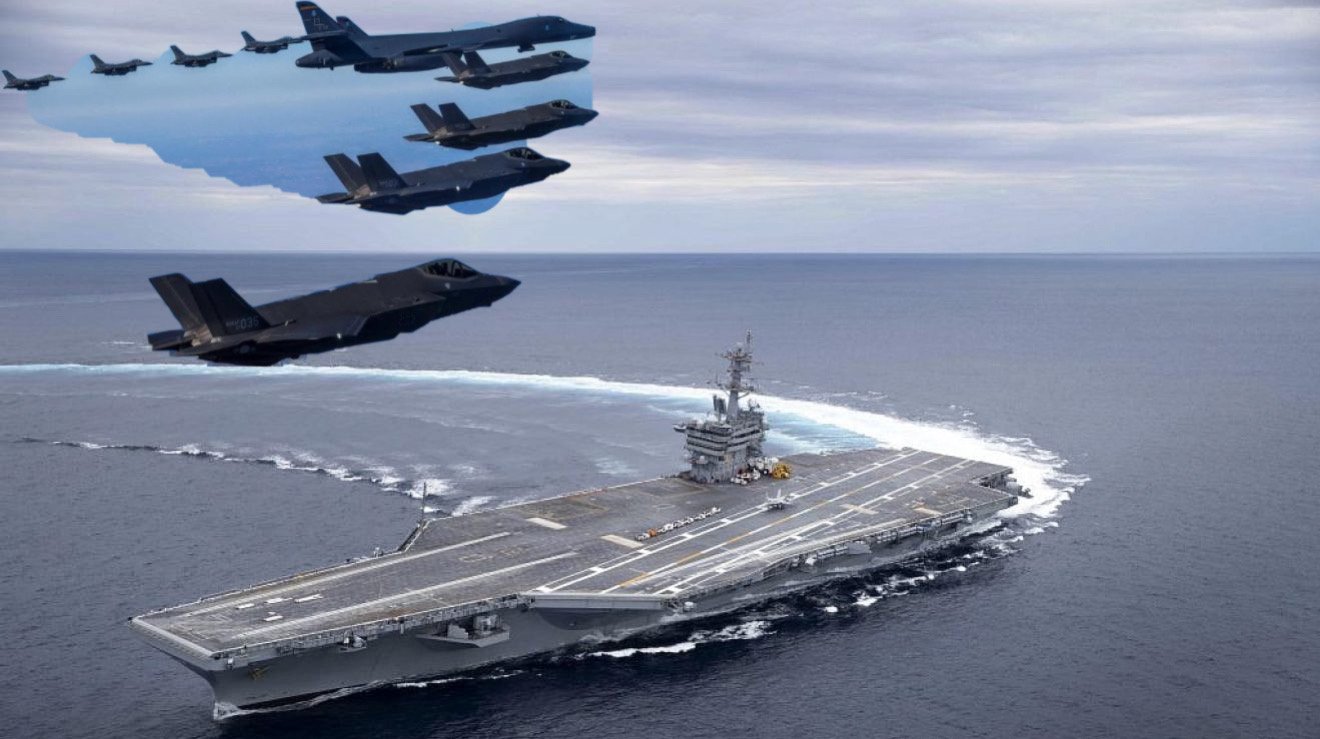
    The military buildup is unmistakable. The UK’s No. 12 Squadron RAF has deployed to Qatar with four Eurofighter Typhoon jets, bolstering defensive postures amid escalating tensions. Meanwhile, US tankers are en route to Ramstein, adding to an estimated 79 USAF and RAF aircraft now active in the region. US Central Command forces in the Middle East include Tomahawk-armed naval assets such as USS Mitscher, USS McFaul, USS Oscar Austin, USS Roosevelt, USS Bulkeley, USS Paul Ignatius, USS South Dakota, and USS Georgia. The Abraham Lincoln carrier strike group brings additional firepower, with the USS Abraham Lincoln itself escorted by destroyers like USS Frank E. Petersen, USS Spruance, and USS Michael Murphy, plus nine squadrons of fighter jets aboard.

    Other US Navy ships—USS Mount Whitney, USS Lewis B. Puller, USS Tulsa, USS Canberra, USS Santa Barbara, and support vessels like USNS Carl Brashear, USNS Henry J. Kaiser, USNS Bruce C. Heezen, and USNS Marie Tharp—provide command, logistics, and sustainment. On the ground, squadrons include two F-35 units, three F-15E squadrons, an F-16 squadron, and an A-10 squadron. Rotational assets encompass P-8A Poseidon maritime patrol aircraft, C-17A Globemaster transports, KC-135 Stratotankers, KC-46A Pegasus refuelers, KC-130J Super Hercules, and MQ-4C Triton drones. Even the US Coast Guard has deployed cutters like USCGC Charles Moulthrope, USCGC Robert Goldman, USCGC Glen Harris, USCGC Emlen Tunnell, USCGC John Scheuerman, and USCGC Clarence Sutphin, Jr.

    Israel’s involvement will be crucial, especially in air power and strikes—no other force matches their expertise here. The Israeli Air Force maintains a formidable fleet of over 600 aircraft, including around 48 F-35I Adir stealth fighters (with more arriving), hundreds of F-16s, F-15s, and advanced electronic warfare platforms. We saw their dominance in the recent conflict with Iran, where Israel achieved air superiority in just 48 hours without significant external involvement, methodically dismantling threats through precision strikes and overwhelming aerial control.

    Iran will almost certainly attempt missile launches against Israel in any escalation, with or without direct Israeli participation—so Israel’s proactive role is inevitable and essential.

    The strategy must prioritize the first and second waves of airstrikes. These should target Iran’s missile storage and launchers to neutralize retaliatory capabilities, IRGC terror hubs, regime officials, and nuclear facilities—especially underground sites. (cannot risk ignoring them; in a do-or-die scenario, the Mullah regime will try for unpredictable terror tactics.) The goal is to dismantle the entire framework of the regime from top leaders to the bottom ranks, preventing any quick replacement by the same terrorist clique. The IRGC represents the purest form of terror, and the Mullah leadership—from Khomeini onward—has maintained an iron grip. During operations, defections or safe exits for certain officials could be facilitated to accelerate collapse.

    Simultaneously, Iran may activate its proxies: the Houthis in Yemen, Iraqi militias, and Hezbollah in Lebanon. (Hamas and Islamic Jihad are largely irrelevant after their recent defeats.) Hezbollah poses a persistent threat, but Israel has countered it effectively for years, with recent strikes proving highly destructive and successful. Israel can handle this front decisively. The Houthis remain a concern, though recent developments with Somaliland could aid containment, and the US will likely take firm action. Few months ago one expert suggested adopting Ukrainian-style drone swarms—cheap, effective, and numerous—for a long-term campaign against them, but with the massive US assets already deployed, overwhelming conventional power seems more probable.

    Iraqi militias can be neutralized through sheer military might. Ending the Mullah regime and its proxies is crucial for lasting peace and stability in the region.

    The Middle East is heating up. Many airlines are canceling flights across the area. What unfolds in the Gulf will redefine geopolitics and modern warfare. Once these events conclude, we can turn to the new Iran—its transition and the broader world politics.