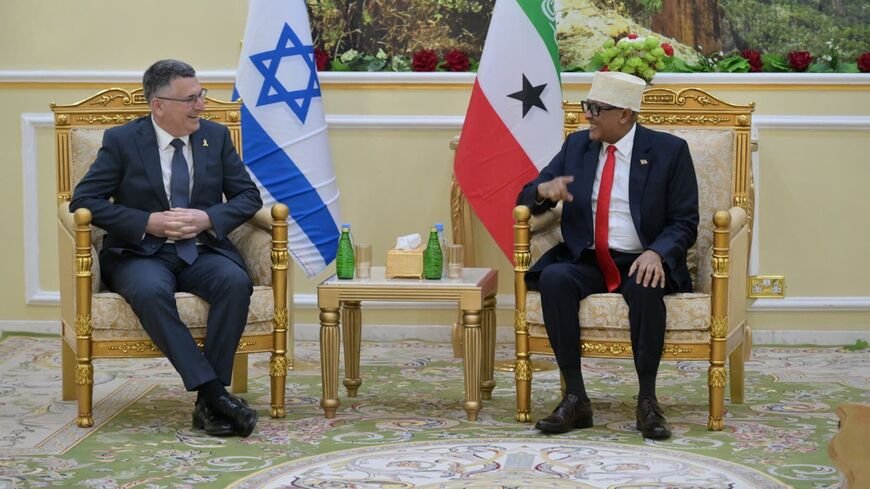
Israel’s decision to become the first UN member state to formally recognize the Republic of Somaliland as an independent sovereign state remains one of the boldest geopolitical moves in recent history.
Prime Minister Benjamin Netanyahu’s announcement on December 26, 2025, framing the mutual recognition as “in the spirit of the Abraham Accords,” has triggered a firestorm of opposition across the Arab and Muslim world. Somalia swiftly condemned it as an “unlawful attack” and a “invasion” of its sovereignty, convening an emergency parliamentary session where lawmakers declared the move “null and void.” The Arab League held an emergency meeting on December 28, strongly rejecting the recognition as a blatant violation of international law and Somalia’s territorial integrity. Qatar issued a particularly sharp statement, categorically rejecting the mutual recognition as a “dangerous precedent” that undermines Somalia’s unity, while urging Israel to instead recognize a Palestinian state.
Turkey, Egypt, the Gulf Cooperation Council, and the Organization of Islamic Cooperation joined a chorus of condemnation, with a joint statement from 20 countries —including Saudi Arabia, Iran, Pakistan denouncing it as a grave threat to regional peace. Even terrorist groups have weighed in: Yemen’s Iran-backed Houthis, through leader Abdel-Malik al-Houthi, threatened that any Israeli presence in Somaliland would be considered a “military target,” viewing the move as aggression against Yemen and the Red Sea. Al-Shabaab, the al-Qaeda-linked militants in Somalia, vowed to “fight against” any Israeli attempt to “claim or use” Somaliland territory, framing it as expansion into Somali lands.
Qatar-based Al Jazeera has led a relentless media offensive, with multiple articles slamming the recognition, linking it to alleged plans for forcibly displacing Palestinians from Gaza to Somaliland, and amplifying condemnations from Somalia and regional blocs. They used ” Maybe” to plant their accusation. These biased coverages shows the ideological opposition from certain quarters.
Israel gave the best possible response to everyone. Their MFA Gideon Sa’ar clearly stated that ”Somaliland was not created this past weekend. It has existed as a functioning state for more than 34 years. The attacks on Israel’s recognition of Somaliland are hypocritical. Only Israel will decide who to recognize and with whom to maintain diplomatic relations.”
Netanyahu simply emphasized historic ties, noting Israel’s brief recognition of Somaliland in 1960, and pledged cooperation in agriculture, technology, health, and economy. Somaliland’s President Abdirahman Mohamed Abdullahi hailed it as a “historic moment,” committing to join the Abraham Accords and promoting counterterrorism and regional peace.
When radical groups like the Muslim Brotherhood allies, Houthis, and al-Shabaab rally against something—joined by states prioritizing outdated unity over facts on the ground—it often signals that it’s the right call. Somaliland stands as a moderate, secular-leaning Sunni Muslim-majority nation with functioning democracy, stability, and progress, in stark contrast to Somalia’s ongoing chaos, piracy, and al-Shabaab dominance.
China has played a prominent role in the backlash, firmly opposing the recognition and reaffirming support for Somalia’s territorial integrity. Chinese Foreign Ministry spokesperson stated that China “firmly opposes” any attempt to split Somalia’s territory, describing Somaliland as an “inalienable part” of Somalia and urging an end to “unwarranted interference” and “collusion with external forces.” At the UN Security Council emergency meeting on December 29, China’s deputy permanent representative Sun Lei reiterated grave concern, warning that the move increases tensions in the Horn of Africa and serves selfish geopolitical interests. State media like CGTN echoed these statements as usual. However, the relationship between China and Somalia extends beyond these statements. Reports suggest China’s strategic partnership with Somalia includes military components and broader support, aligning Beijing’s position against what it sees as separatist precedents—much like its stance on Taiwan.
The West’s hesitation remains disappointing. The United States is “studying” the issue. The EU reaffirmed Somalia’s integrity, urging dialogue. That’s too pathetic even for the EU. They should be supporting the nation with democratic values instead of following authoritarian dictators and the Muslim Brotherhood. But they picked chaotic Somalia over a democratic nation like Somaliland. They choose the easy and pandering path instead of doing the right thing. Nigel Farage again stood out, praising the move, but most Western leaders stay silent amid fears of backlash.
Adding to the irony is the reaction—or lack thereof—from figures like Rep. Ilhan Omar, the so-called tolerant progressive who champions “justice” and “tolerance” on global stages. Yet when it comes to Somaliland, she has long defended Somalia’s territorial unity with fierce nationalist zeal, insisting “Somalia is one” and opposing any “balkanization” of the land. Her past statements, including in Somali-language speeches emphasizing unbreakable Somali brotherhood and blood ties, reveal a side far more rigid and nationalist than many ”far-right’ leaders she routinely condemns. The mask of wokeness and inclusivity slips away entirely here, exposing a prioritization of Mogadishu’s claims—and perhaps clan loyalties—over the self-determination of a stable, democratic neighbor.
Somalia vs Somaliland
Let’s look at the ground facts between these two nations. Somalia and Somaliland. Since 2008 there have been 10768 terror attacks in Somalia, while Somaliland has had 0 terror attacks since 2008. Somaliland has had 11 free and fair elections since 2000. Somalia has had 0 fair elections since 1968. Take any positive index and compare them. There’s no match between these nations. Somaliland is undoubtedly one of the most successful African nations, and Somalia is not even close to that legacy.
This isn’t merely an African issue—it’s a global test of resolve against authoritarian influences and instability. Israel’s action, amid threats from terrorists and widespread diplomatic pressure, may not be the easiest path. In fact its the toughest path. But it is unequivocally the right one: rewarding moderation, democracy, and a pro-Western partner in a strategic region. Somaliland’s case parallels Taiwan’s, where opposition stifles recognition of reality.
Israel has led with courage. The free world must now follow, rejecting fear and showing unity. The stakes—for stability in the Horn of Africa, Red Sea security, and beyond—are too high to ignore.
”There are no easy answers, but there are simple answers. We must have the courage to do what we know is morally right.” – Ronald Reagan (A Time for Choosing Speech, 1964)