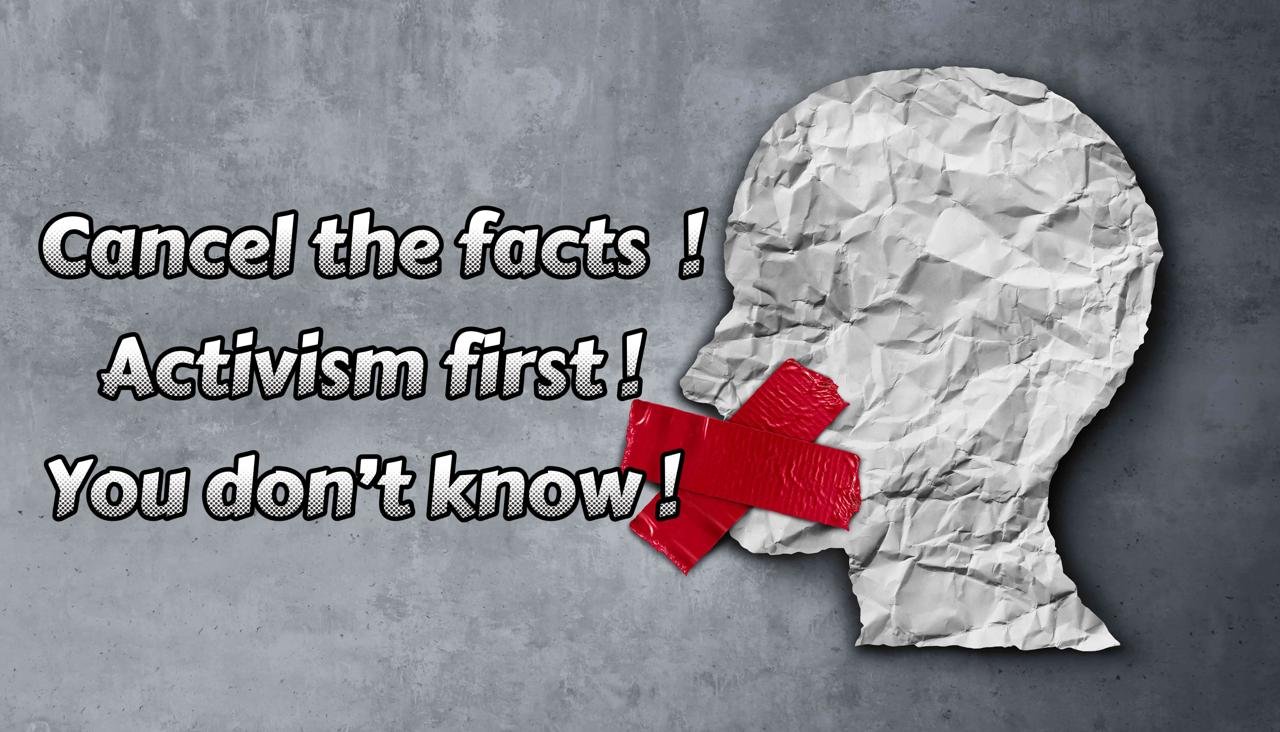
When some news sites reported a Sri Lankan media delegation visiting Israel, it became a lightning rod for cancel culture. The backlash was swift and vicious. Pro Palestinian activists labeled it as a betrayal before the journalists could even report facts or give interviews. Violent comments flooded in, some demanding personal details like names and organizations, others hurling curses. This chaos erupted not in response to biased reporting but to the mere act of visiting Israel. This is the face of modern cancel culture, where a loud minority’s mob mentality seeks to silence voices before they can speak. In Sri Lanka, where journalists once reported on the civil war from both government and LTTE sides despite risks, this intolerance marks a dangerous shift. This is a perfect example of how journalism, meant to uncover truth, is being hijacked by a doctrine that demands: ignore the facts, just blame Israel.
Practicle Journalism doesn’t have a fixed formula for reporting news. Reporters use various methods based on their content, goals, and the story’s nature. Ideally, exploring both sides brings you closer to the truth. The wagon wheel approach examining multiple perspectives offers an even bigger and better picture. In American politics, you can watch Fox and CNN to find a middle ground. So even one -sided reporting isn’t so horrible as long as you have different platforms. The beauty is that you have lots of choices, perspectives like brands in a market. You have source A, source B, source C, and if needed, source D. You can pick one, two, or all four and then make up your mind. This is what we expect in a sane world.
But the Israel-Hamas war operates under a different set of rules. In conflicts like Russia-Ukraine, journalists can report from both sides without being “canceled.” You can go to Kyiv or Moscow and dig into the story. Yet, in the Israel-Hamas conflict, such scrutiny is rare. Outlets like the BBC and the UN rely heavily on the Gaza Health Ministry and Hamas press releases, often without questioning their credibility. These sources feed inflated casualty figures, like the “70% women and children” claim, later halved by the UN due to obvious misinformation.
Hamas has mastered propaganda. They flood platforms with strong lies. We are living in an era in which AI-generated images and dramas are getting more reach on social platforms than statistics based on facts. The Gaza Health Ministry, under Hamas’s control, feeds dubious numbers to the press, which outlets amplify without enough skepticism. The al-Ahli Hospital blast in 2023 is a prime example—Hamas blamed Israel, al-Jazeera echoed it, and social media erupted, only for evidence to confirm an Islamic Jihad rocket caused it. But the truth never had the same publicity as lies.
The saddest part is that global cancel culture has turned journalism into biased activism, even aiding a modern-day Holocaust denial. Reporting the personal experiences of October 7 survivors, sharing victims’ stories, or simply remembering them—bare minimum acts of humanity—meets massive outrage. This isn’t just happening in the Middle East but in Western capitals, media platforms, and outlets. Erasing the terror of October 7 by bowing to mobs forces us to rethink modern society. This behavior is closer to Taliban values than Western principles of free expression and truth. The Israeli perspective is consistently met with hostile comments, demands for cancellation, and abusive statements. Counterarguments that challenge Hamas’s narrative often spiral into chaos, mirroring the intolerance seen in Western universities, where “river to the sea” activism replaces discussion with disorder.
Surrendering to this mob mentality is unthinkable. Instead, we need to balance the flow of information on the Israel-Hamas war. Stories of survivors and victims’ must be told at all costs. Mainstream media often fails here, caving to cancel mobs and pro-Hamas activism instead of amplifying the silent majority. Media delegations, like Sri Lanka’s, have a chance to uncover facts—past, present, and future. Investigative journalists could question the UN’s aid distribution failures, or expose Hamas’s aid-selling schemes. These fact-based discussions are essential.
The backlash against the Sri Lankan delegation for visiting Israel is no surprise but deeply concerning. A loud minority with mob mentality shouldn’t dictate a nation’s opinions. Journalism must burst this bubble and create a balanced ground. Reporters need to challenge sources like the Gaza Health Ministry, dig deeper, and resist emotional manipulation. Fighting this chaos tactic and cancel culture phenomenon means prioritizing facts over fear, ensuring the silent majority’s voice rises above the chaos. It’s always truth versus lies. Lies are usually popular. Truth often meets heavy resistance. But in the end, truth comes out, and we have to fight for it. This is not just a fight for Western values. This is a fight for truth and stability over lies and chaos.